
The business world is experiencing a profound shift where traditional models of management, anchored in rigid hierarchies and static roles, no longer meet the demands of a hyper-complex, rapidly changing landscape. The timeless truth that “nothing fails like success” warns us that once-successful responses are entirely inadequate when faced with completely new challenges. In this era of relentless digital disruption, artificial intelligence, climate change, and evolving generational expectations, the baseline for leadership success has fundamentally moved.
To survive and thrive, organisations can no longer rely on managers who are promoted solely for their technical brilliance – a phenomenon known as the “identity competence trap” or “identity lag,” where new leaders struggle to transition from hands-on experts to true guides. Instead, the modern economy demands a new breed of leader: The Future-Fit Leader.
Drawing on a deep synthesis of global leadership studies, organisational diagnostics, and neuroscientific research, this article outlines the essential mindsets and competencies required of tomorrow’s leaders to thrive.
1. The Skills-Based Revolution: What is a Future-Fit Leader?
Over the past decade, forward-thinking organisations have abandoned traditional competency models because they are too slow and rigid to address dynamic modern demands. This has created a guidance gap in talent development. Extensive industry findings show that the traditional focus on positional authority is being replaced by a skills-based, human-centric mindset.
Future skills can be understood as those action-oriented competencies that will be particularly crucial to navigate and thrive in an evolving landscape. Modern frameworks divide these vital competencies into four broad, universally relevant categories, complemented by specialised technical expertise:
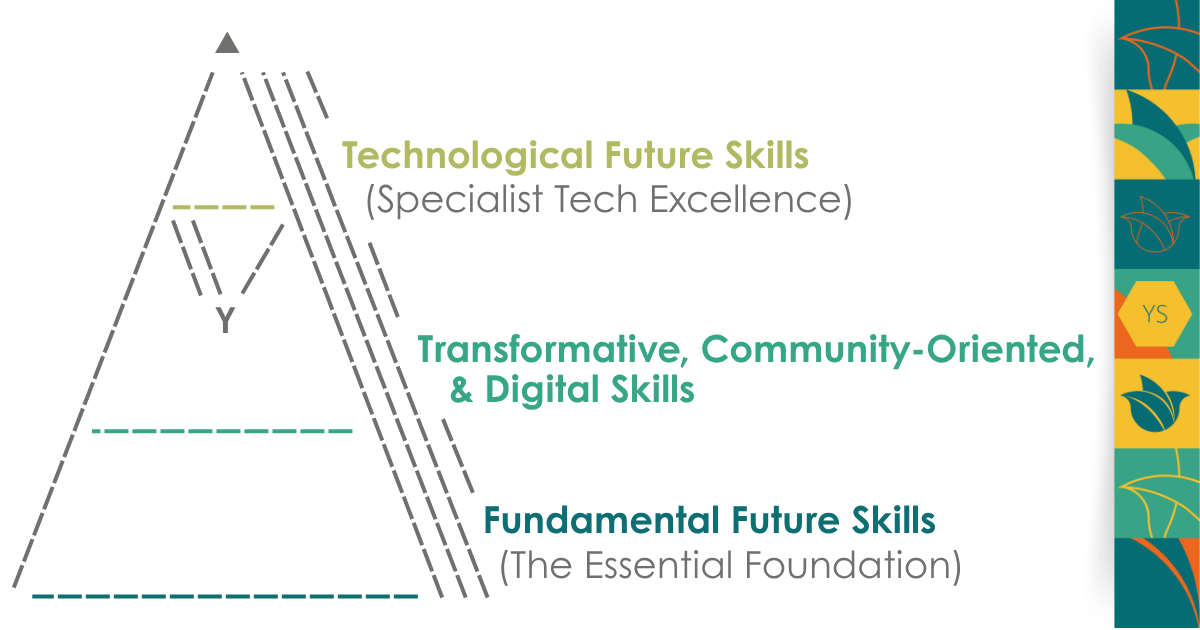

Fundamental Future Skills
The cross-cutting baseline includes critical thinking, communication, problem solving, cooperation, creativity, and self-management.

Transformative Future Skills
The competencies needed to actively shape change, drive innovation, and navigate systemic complexity, such as systems thinking, tolerance of ambiguity, and resilience.

Community-Oriented Future Skills
Essential for social cohesion and collaborative problem-solving in a diverse society, including dialogue competence (which integrates empathy), democratic competence, and responsibility & accountability.

Digital Future Skills
The confident, critical and ethical use of digital technologies, encompassing information, AI, media, and data literacy.

Technological Future Skills
Expert-level skills in key technologies like data science, AI engineering, cybersecurity, and autonomous systems.
At the intersection of these future skills sits an integrated, validated framework defining eight core competencies that Future-Fit leaders must cultivate:
Self-Aware Leadership
Understanding one’s strengths, recognising development areas, and acknowledging emotional impact to build authentic trust.
Learning and Growth
Embracing a growth mindset and upskilling to foster a continuous learning culture.
Adaptive Leadership
Thriving in an unpredictable world, staying steady in ambiguity, and guiding teams through complex transitions.
Collaboration
Working across boundaries and diverse ecosystems to combine expertise and drive innovation.
Empowering Leadership
Encouraging initiative, supporting autonomy, and upskilling teams to build ownership.
Inclusive Leadership
Building equitable workplaces that value and engage diverse perspectives, backgrounds, and orientations.
Innovation and Technology
Experimenting continuously and leveraging AI to enhance decision-making and productivity.
Sustainability Leadership
Taking a long-term perspective that balances organisational success with social and environmental responsibility.
The urgency of this shift is clear. In global surveys of organisational readiness, 94% of executives rate future-ready leadership as an essential priority for organisational success, yet only 25% believe their current leadership culture is fit-for-purpose.
2. Leadership Personas for an Era of Change
To understand how global leaders are successfully managing this transition, extensive research of more than 2,000 C-suite executives across 19 countries identified four distinct leadership personas who navigate technological change and uncertainty with remarkable success:
A. The "Social Supers"
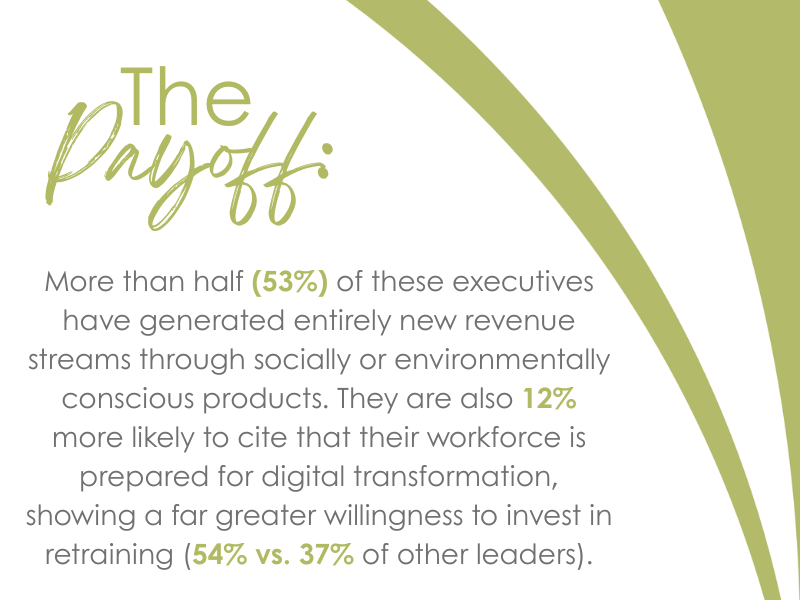
These leaders treat societal and environmental initiatives as fundamental to their business strategy, proving that purpose and profit can coexist. In fact, 34% of global leaders now gauge success primarily by their societal impact, compared to only 17% who prioritise financial performance alone.
B. The "Data-Driven Decisives"
Strategic execution often falters because of organisational silos and a lack of clear decision-making processes. Data-Driven Decisives overcome these bottlenecks through a methodical, data-focused approach and bolder execution.
C. The "Disruption Drivers"
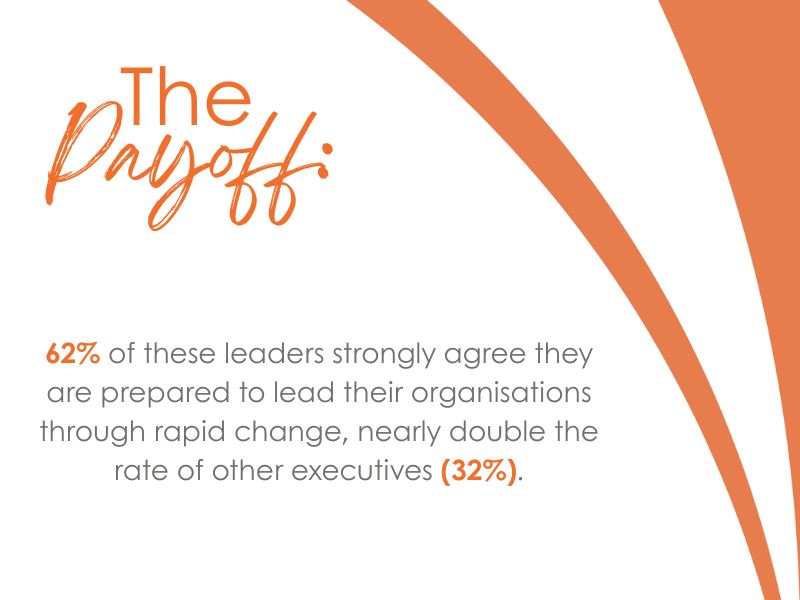
These executives understand that maintaining the status quo is the fastest route to obsolescence in a volatile and ambiguous world. They invest aggressively in technologies with a concerted focus on upending their markets.

D. The "Talent Champions"
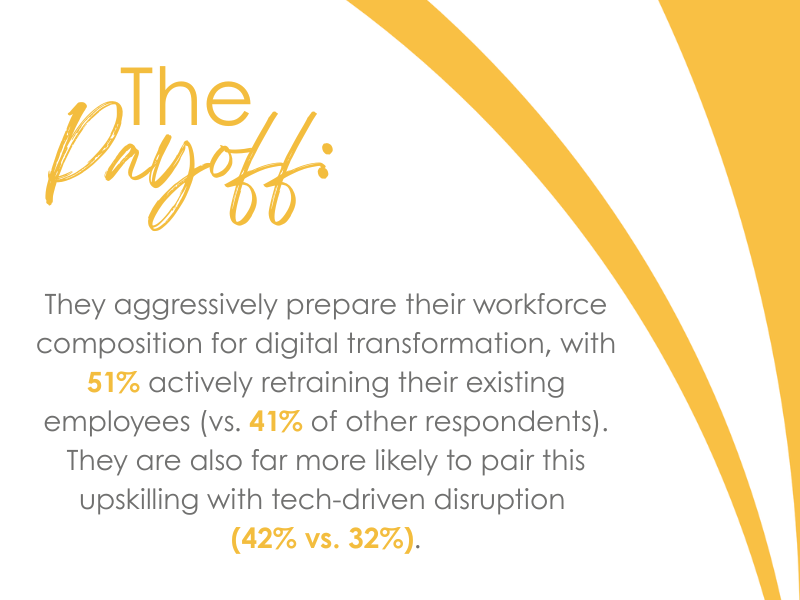
With more than half of global leaders reporting a mismatch between current capabilities and those needed for the future, Talent Champions take active responsibility for the upskilling crisis.
3. Learning Agility: The Neurological Engine of Change
How do leaders transition from their current state into these adaptive personas? The answer lies in Learning Agility – the neurological and behavioural engine of personal transformation.
Learning Agility is defined as the willingness and ability to learn from experience and apply those lessons to new, first-time situations. Research indicates that organisations with highly learning-agile executives achieve 25% higher profit margins than their peers, and agile leaders are promoted at twice the pace and are five times more likely to be considered highly engaged.
At its core, Learning Agility consists of five factors: Mental Agility, People Agility, Change Agility, Results Agility, and Self-Awareness. From a neuroscientific perspective, developing these five factors relies on three foundational pillars:

Motivation (The Willingness to be Exposed)
This is the drive to step out of one’s comfort zone and face challenging, unfamiliar experiences. Neurobiology shows that our brains naturally dislike being wrong; admitting a mistake triggers the same neural circuitry as processing physical pain. Conversely, being considered right activates the brain’s pleasure and reward circuitry in the limbic system, releasing dopamine. Agile leaders learn to overcome this cognitive bias, embracing the discomfort of “unlearning” and treating failure as an essential learning metric.

Ability (The Capability to Capitalise)
This is the cognitive ability to process complex, unstructured inputs and transfer information from short-term working memory to long-term memory. This process builds state-dependent, implicit memory pathways that can be accessed under pressure.

Application (The Flexibility to Execute)
The behavioural flexibility to inhibit automatic, hardwired shortcuts and deliberately apply past learning to completely new contexts.
4. Human-AI Co-Creation: Conducting the "New Diversity"
Perhaps the most critical challenge facing the Future-Fit Leader is managing the “New Diversity” – the integration of Human-AI Teams (HAT) in the daily workflow. In this digital era, the boundaries of leadership are being completely redrawn.

A common corporate error is attempting to replace human leaders with autonomous algorithms. A crucial distinction exists in this modern paradigm: algorithms excel at managing, but humans must lead.
Algorithms Manage
They are champions at narrow, well-defined tasks, processing vast volumes of data, finding patterns, and optimising efficiency. However, they operate in a context-free vacuum and lack a “complete mind” (agency and experience), making them incapable of feeling authentic emotions, understanding human meaning, or making ethical judgments.
Humans Lead
Leadership is inherently a relational, value-driven process of influence. It requires sense-making – the complex cognitive, motivational, and emotional capability to interpret information in light of organisational values and stakeholders’ interests.
The future of work is not a zero-sum race against the machines, but a race with them. Research shows that co-creation generates exponentially better outcomes. For example, in a medical study of diagnostic accuracy, AI cell detection alone was 92% accurate, and human pathologists achieved 96% accuracy; however, when the two collaborated, the accuracy rate rose to a spectacular 99.5%.
The Future-Fit Leader must act as an orchestral conductor. They must delegate routine analytical and administrative tasks to autonomous agents, freeing up cognitive space for humans to focus on high-level, complex, and human-centric responsibilities. Crucially, they must establish ethics frameworks and moral guidelines to ensure that technology is deployed in sustainable, human-centred ways that protect human well-being and privacy.
5. Fostering the Shift: The Blueprint for Success
For organisations and individual leaders ready to embark on this transformation, the transition from conventional manager to Future-Fit Leader requires an intentional, daily focus. It begins with three immediate actions:

Ditch the Ivory Tower (Cultivate Humility)
Leaders who assume they know everything limit their organisation’s potential to their own narrow expertise. Adopting a beginner’s mindset – characterised by continuous questioning, active listening, and acknowledging mistakes – is the baseline for building trust and psychological safety.

Prioritise "Time to Think"
Research shows that when leaders are consumed by constant firefighting and back-to-back meetings, they operate on autopilot. To develop strategic and creative intelligence, leaders must block out protected time to step back, reflect, and digest external trends.

Build a Custom Skills Curriculum
High-performing Future-Fit leaders do not leave their growth to randomness. They proactively design their own learning curriculum – scheduling specific blocks for upskilling, executive coaching, and reading across disciplines.
In a world defined by volatility and transformation, staying static is synonymous with falling behind. The Future-Fit Leader is an enthusiastic prospector who steps boldly into the unknown, embraces the “new diversity” of AI, and ensures that the ultimate metric of corporate success remains deeply anchored in our shared humanity.
