Avoiding necessary conflict does not save relationships – it flat-lines them. In leadership, the standard you walk past is the standard you accept, and every unaddressed issue slowly chips away at your team’s culture. As John C. Maxwell wisely notes, we must shovel the pile while it is small.
If your team is suffering from conversation chaos – where gossip replaces direct feedback and performance issues are quietly ignored – the solution is not a set of rigid policies. The solution is building a culture of courageous, high-care communication.
Here is a short, battle-tested framework to help you navigate difficult conversations with confidence, empathy, and clear impact.
1. The Core Stance: Care Personally, Challenge Directly
Many managers fall into the trap of believing they have to choose between being a kind person and being an effective boss. This is a false choice.
Kim Scott’s Radical Candour framework teaches us that the best leadership happens at the intersection of two critical dimensions: Caring Personally and Challenging Directly.
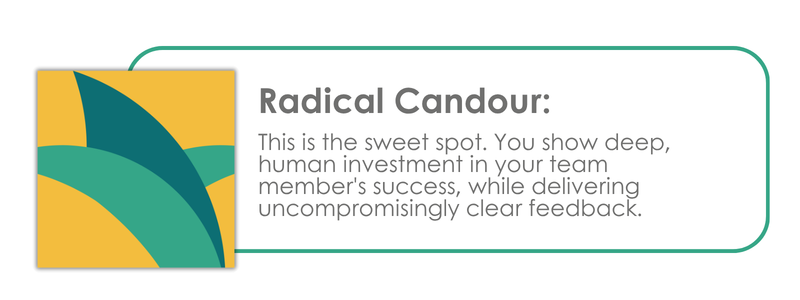
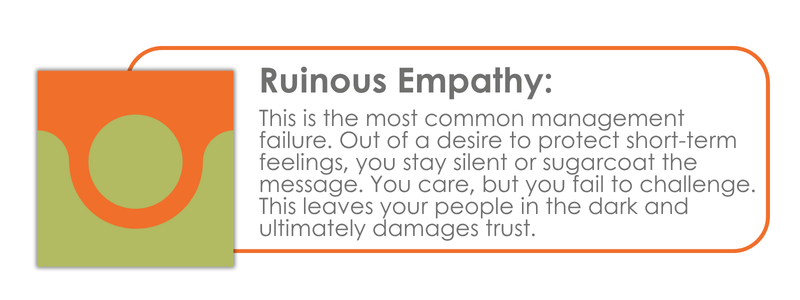

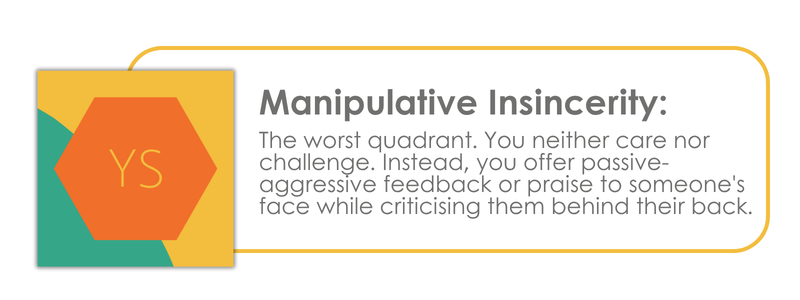
As Brené Brown summarises: “Clear is kind. Unclear is unkind.” Hiding a hard truth in superficial praise is a form of self-protection, not empathy.
2. Build Sinek's "Circle of Safety"
Stephen Covey introduced the concept of the Emotional Bank Account, reminding us that every positive interaction is a deposit, and every tough conversation is a significant withdrawal. If you have not built a solid foundation of trust beforehand, your difficult conversation will overdraw the account, causing the relationship to rupture.
This biological reality is backed by Simon Sinek’s research on the Circle of Safety. Sinek explains that when employees feel safe from internal threats, politics, and social humiliation, their brains produce oxytocin – the hormone responsible for bonding, empathy, and collaboration.
But when trust is low, the brain experiences a threat response, releasing cortisol and triggering fight-or-flight defences. In a low-trust culture, employees pay a “trust tax” that slows down execution and kills innovation. To make tough feedback land constructively, you must first establish a Circle of Safety.
3. Ditch the Pillows: Susan Scott's 60-Second Opener
When it is time to have the conversation, do not ease into it with awkward small talk or wrap the criticism in a compliment “sandwich.” Hiding the core message in “too many pillows” only spikes anxiety and dilutes your message.
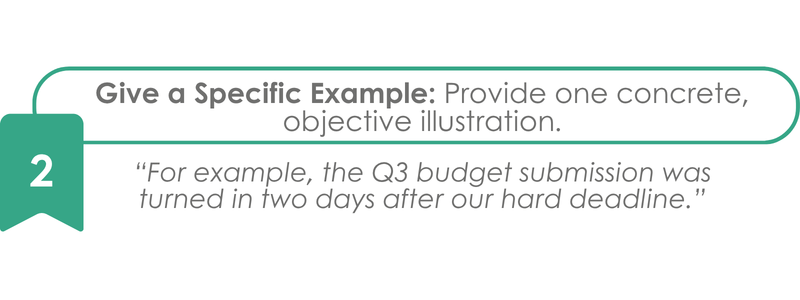
Susan Scott’s Fierce Conversations suggests coming straight to the point with a prepared, 60-second opening statement:



4. Listen to the "Three Conversations"
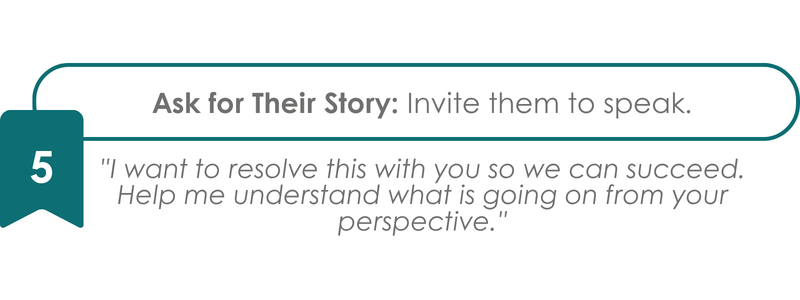
Once you ask for their perspective, transition immediately into active listening. Stephen Covey’s Habit 5 is your golden rule: Seek first to understand, then to be understood.
According to the Harvard Negotiation Project, every difficult conversation operates on three hidden layers:
The "What Happened" Conversation:
Moving past who is “right” to understand each other’s story.
The Feelings Conversation:
Identifying and acknowledging the emotions driving the conflict.
The Identity Conversation:
Recognising what this situation says about our self-worth. (Am I competent? Am I a good person?)
Listen with pure curiosity. Do not spend their speaking time formulating your rebuttal. You cannot move the conversation in a constructive direction until the other person feels fully heard and understood.
Ready to Transform Your Team's Communication?
Mastering difficult conversations is a muscle. When your leaders avoid these moments, team performance stalls, trust erodes, and turnover rises.
At Yellow Seed Consulting, we partner with organisations to build high-performance, high-care communication environments. Through customised workshops, interactive simulations, and executive coaching, we help your leaders overcome conflict avoidance and build the skills to lead with courageous candour.
Let’s plant the seeds for a high-trust culture. Contact Yellow Seed Consulting today to learn how we can support your leadership team.
Download our Free Guide:
Architecting Alignment:
The Master Guide To Navigating Difficult Conversations Well