
A Founder’s Guide to Recognising When DIY HR Becomes a Growth Bottleneck
In the early stages of building a business, wearing multiple hats is not only common but it is often celebrated. Founders are expected to be deeply involved in every aspect of the organisation, from strategy and sales to operations and team development. Somewhere along this journey, however, most founders also find themselves taking on responsibility for human resources. They hire the first employees, draft employment contracts, answer payroll questions, resolve interpersonal tensions, and ensure the team remains motivated and aligned with the company’s vision.
In the beginning, this approach can work surprisingly well. Small teams often rely on trust, informal communication, and founder-led decision-making, and this closeness can create a strong sense of culture and momentum. The founder’s direct involvement in hiring and people decisions can also help shape the organisation’s values and identity.
Yet as the company grows, we have noticed that something begins to shift. The very processes designed to support the organisation’s growth, hiring new employees, onboarding them effectively, ensuring payroll accuracy, managing performance conversations, and maintaining compliance with labour legislation, gradually become more complex and time-consuming. What once felt manageable begins to demand increasing attention from leadership.
Instead of spending most of their time refining strategy, strengthening client relationships, and identifying new growth opportunities, founders often find themselves responding to administrative HR issues. They may be drafting offer letters late at night, troubleshooting team conflicts, researching labour regulations online, or tracking recruitment activity across spreadsheets and email threads. What initially appeared to be manageable operational work slowly evolves into a hidden drain on leadership energy and attention.
This moment represents what many growing organisations experience as the founder’s paradox: the business is expanding successfully, but the systems required to manage people have not evolved at the same pace.

When Growth Creates Complexity
The success of a business inevitably brings greater organisational complexity. A team of five employees can function effectively with relatively informal processes and minimal documentation. Communication is direct, expectations are clear, and decisions can be made quickly.
However, when the organisation grows to twenty, thirty, or fifty employees, those same informal processes begin to break down. Recruitment becomes more frequent and requires structured evaluation criteria. Onboarding must ensure that new employees are integrated quickly and effectively. Managers need support in leading teams, setting expectations, and resolving performance concerns. Policies and procedures must be consistent to ensure fairness and compliance.

Despite this, many founder-led organisations postpone building structured HR systems until challenges arise. HR processes often evolve reactively rather than intentionally, with new policies or procedures introduced only after a problem occurs.
Over time, these reactive solutions can create confusion rather than clarity, leaving organisations with fragmented systems and inconsistent practices.
The Hidden Cost of Manual HR
One of the most underestimated challenges in scaling organisations is the hidden cost of manual HR administration. Many founders assume that managing HR themselves saves money because there is no dedicated HR salary attached to the work. However, research suggests that this assumption often overlooks the real costs associated with inefficiency and lost productivity.

These costs often appear indirectly through lost time, duplicated work, and avoidable mistakes.
For example, HR leaders report spending the equivalent of four full working weeks each year on manual administrative tasks, including data entry, document management, and responding to routine employee queries (Paychex).
For founders or senior leaders, this represents more than 160 hours per year that could otherwise be devoted to strategic decision-making or revenue-generating activities.
Administrative inefficiencies can also create measurable financial losses.
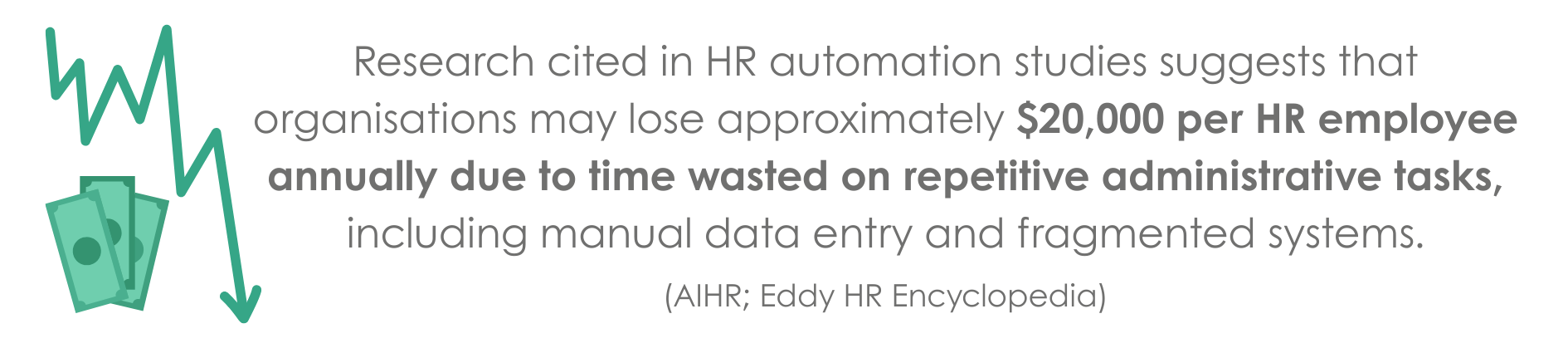
Recruitment processes are particularly susceptible to inefficiencies when managed manually.

Even onboarding processes can have a significant financial impact.

Compliance: A Risk Many Growing Businesses Underestimate
As organisations expand, the complexity of employment legislation and regulatory compliance also increases. Employment contracts, disciplinary procedures, leave policies, workplace safety regulations, and employee documentation must all align with evolving legal requirements.
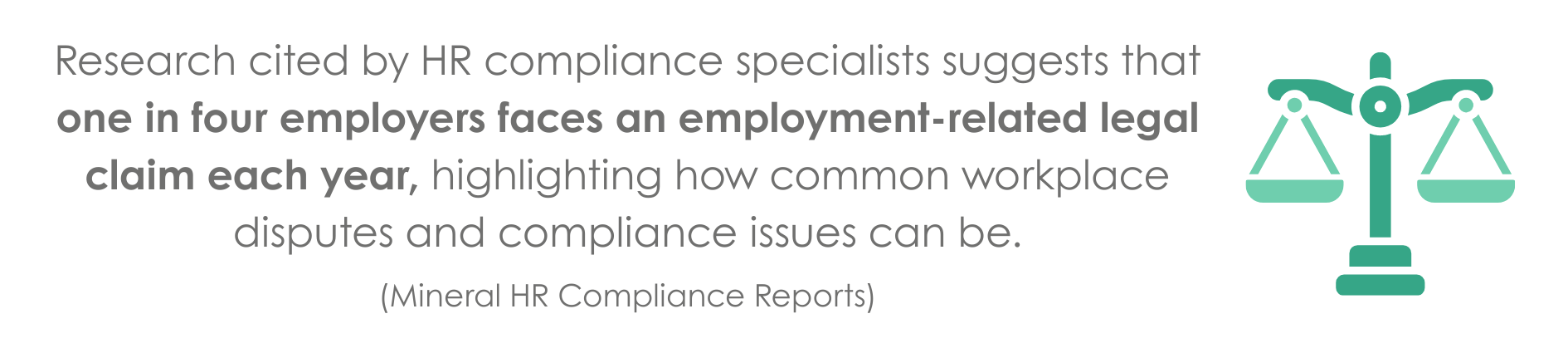
The potential financial consequences can also be significant.

For founders who did not start their business with the intention of becoming experts in labour law, navigating these complexities can feel overwhelming. Yet without clear policies, documentation, and procedures in place, organisations may unknowingly expose themselves to unnecessary legal risk.
The Evolution of HR in Growing Organisations
As organisations mature, the role of HR must evolve alongside the business. Research on Electronic Human Resource Management (E-HRM) describes three stages in the development of HR capabilities (Wikipedia, Electronic Human Resource Management).
At the operational level, HR focuses primarily on administrative functions such as payroll management, employee record keeping, and compliance documentation.
At the relational level, HR systems begin to support key organisational processes, including recruitment platforms, learning management systems, and performance management tools.
Finally, at the transformational level, HR becomes closely aligned with organisational strategy, supporting areas such as workforce planning, leadership development, knowledge management, and organisational culture.
Many growing organisations remain stuck in the operational stage of HR long after the complexity of the business requires more advanced capabilities.
Without deliberate investment in people, systems and processes, HR continues to operate reactively rather than strategically (AIHR; 4Spot Consulting).
The Opportunity: Creating an Integrated HR Ecosystem
The most successful organisations recognise that scaling a business requires more than simply hiring additional HR administrators. Instead, they focus on building integrated HR ecosystems that combine effective processes, technology, and leadership capability.
Modern HR technologies enable organisations to automate many rule-based administrative activities, including document generation, recruitment workflows, employee data management, and performance review administration.
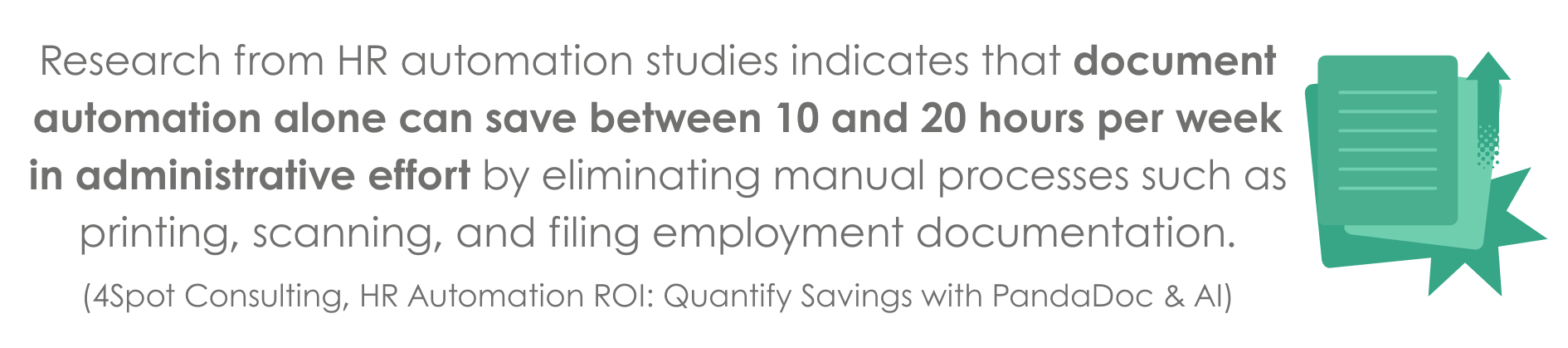
Automation does not remove the human element from HR. Instead, it allows HR professionals and leaders to focus their attention on higher-value work such as developing leadership capability, strengthening organisational culture, and improving employee engagement (4Spot Consulting, Stop the Silent Drain: Reclaiming HR Efficiency with AI & Automation).
Culture Remains a Leadership Responsibility
A common misconception about strengthening HR systems is that doing so somehow distances leadership from organisational culture. In reality, the opposite is true. While HR professionals may design the frameworks that support performance, development, and employee engagement, culture itself is always shaped by leadership behaviour.
Culture emerges from the decisions leaders make, the behaviours they tolerate, and the standards they set for accountability and collaboration. HR systems can reinforce and sustain culture, but they cannot replace the leadership behaviours that bring those values to life.
Reclaiming Leadership Focus
When organisations invest in stronger HR systems and processes, one of the most significant benefits is the return of leadership focus. Instead of responding to every administrative HR issue personally, founders and executives are able to concentrate on activities that drive organisational growth.
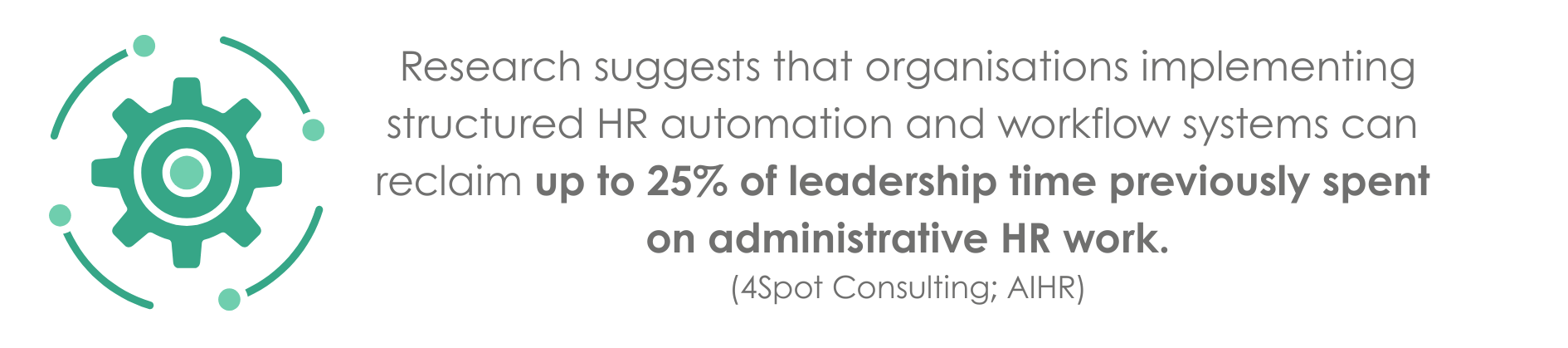
This is equivalent to gaining an additional working day each week, allowing leaders to focus on strategy, innovation, and developing their leadership teams.
A Question Worth Asking
Every growing organisation eventually reaches a point where the original approach to managing people is no longer sufficient for the complexity of the business.
The question leaders must ask themselves is simple:
Is our HR function supporting our growth, or quietly slowing it down?
When HR systems are designed intentionally, they enable organisations to attract great talent, develop capable leaders, and build cultures where employees thrive.
When those systems are absent or fragmented, organisations often experience inefficiency, frustration, and unnecessary risk.
Recognising this moment is not a sign of failure – it is simply the natural evolution of a growing business.
The Opportunity: Creating an Integrated HR Ecosystem
At Yellow Seed, we partner with organisations to build the people infrastructure required for sustainable growth. Through our HR as a Service offering, we support founders and leadership teams in transitioning from reactive HR administration toward intentional people strategy.
This includes strengthening HR foundations and compliance, designing effective recruitment and onboarding systems, developing leadership capability, implementing performance management frameworks, and using employee insights to guide organisational decision-making.
The goal is simple: to ensure that HR becomes a strategic accelerator for growth rather than a hidden constraint on it.
